Polyurea vs. Epoxy: Which Garage Floor Coating is Better?
If you're researching garage floor coatings, you've likely come across both epoxy and polyurea options. While many homeowners search for "epoxy garage floors," there's a superior alternative that outperforms epoxy in every way. Here's what you need to know about polyurea vs. epoxy.
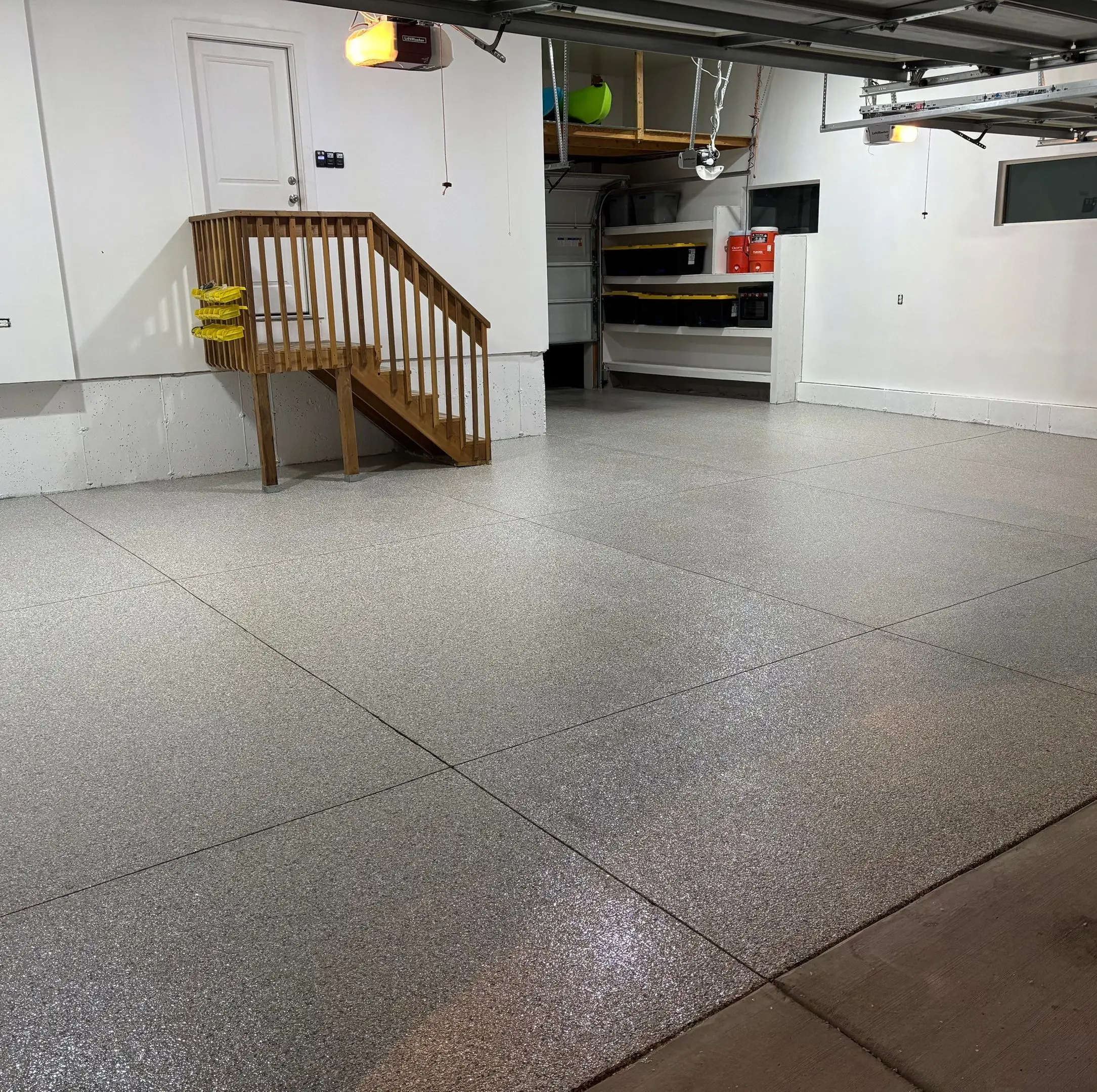
Read the Full Comparison Article →
Quick Summary
Here's a quick overview of the key differences between polyurea and epoxy garage floor coatings:
- 1. Strength & Longevity: Polyurea is 4× stronger than epoxy and built to last, while epoxy is prone to chipping, peeling, and hot-tire pickup.
- 2. Flexibility: Polyurea moves with concrete during temperature changes, while epoxy is rigid and brittle, leading to cracks.
- 3. Cure Time: Polyurea can be installed in 1 day, while epoxy requires 3-7 days of downtime.
- 4. Moisture Resistance: Polyurea has superior adhesion even in variable moisture, while epoxy is moisture-sensitive and prone to failure.
- 5. UV Stability: Polyurea maintains its color and gloss for years, while epoxy yellows and fades in sunlight.
The Bottom Line
While many homeowners search for "epoxy garage floors," polyurea (specifically Penntek polyurea coatings) offers superior performance in every category. At Hardy Surface Co., we use only Penntek polyurea systems because we believe in providing our customers with the best possible product—one that will last a lifetime with proper care.
Ready to Upgrade Your Garage Floor?
If you're considering epoxy garage floors, we'd love to show you why polyurea is the better choice. Our Penntek polyurea coatings come with a lifetime warranty and can be installed in just one day.